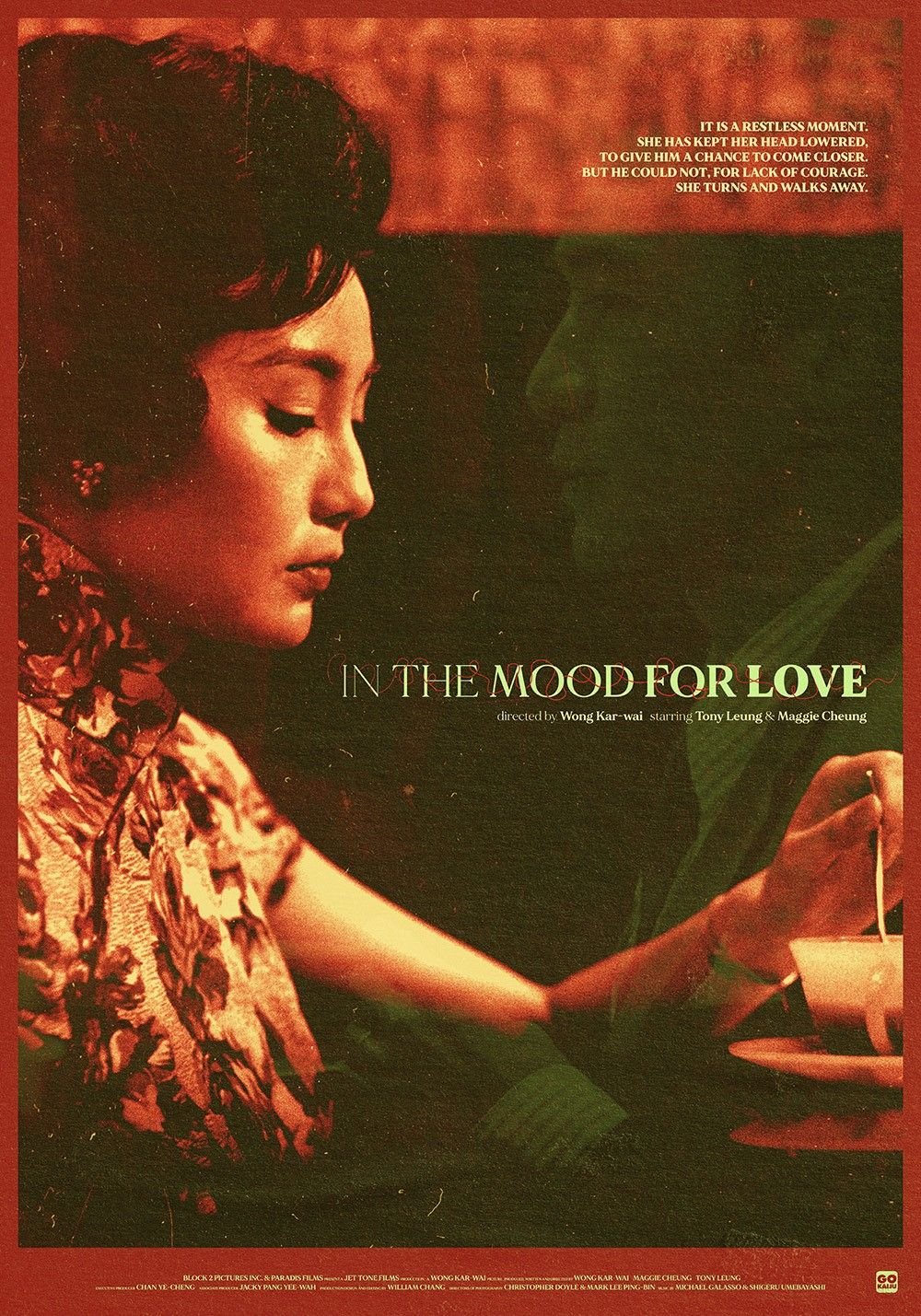
Few films cling to the soul quite like Wong Kar-wai's In the Mood for Love. It's a masterpiece that defies easy categorization, a whispered symphony of longing and regret that continues to captivate audiences and inspire rigorous In the Mood for Love Film Studies across the globe. We aren't just watching a story unfold; we're witnessing a master craftsman paint emotions with light, shadow, and exquisite restraint. This isn't merely a film; it's an experience, a lingering question mark etched into the annals of cinematic history.
If you've ever found yourself lost in its corridors of unspoken desires, trying to decipher a glance, or moved by a slow-motion rain shower, you're ready to peel back the layers of this cinematic gem.
At a Glance: Why 'In the Mood for Love' Endures
- A Story of Unspoken Love: Explores a deeply complex, ambiguous relationship between two neighbors whose spouses are having an affair.
- Wong Kar-wai's Signature Style: Showcases his improvisational filmmaking, exquisite slow motion, and thematic use of doubling and repetition.
- Visually Stunning: Achieves its iconic 1960s Hong Kong aesthetic through meticulous cinematography, art direction, and costume design, especially Su Li-zhen's cheongsams.
- Emotionally Profound: Delves into universal themes of longing, regret, missed opportunities, and the burden of secrets.
- A Landmark in World Cinema: Widely regarded as one of the greatest films of the 21st century and a defining work of Asian cinema.
The Whispered Affair: Deconstructing the Narrative Core
At its heart, In the Mood for Love is an intimate dance between Chow Mo-wan (Tony Leung) and Su Li-zhen (Maggie Cheung). They become next-door neighbors in a cramped 1960s Hong Kong apartment building, both transplants from Shanghai, both grappling with their own quiet lives. Their paths intertwine, first through mundane courtesies, then through a creeping suspicion: their respective spouses are having an affair.
This discovery doesn't spark outrage or confrontation, but a profound, shared grief. Chow, a dedicated journalist, and Su, a hardworking secretary, find solace in each other. They begin a series of role-playing scenarios, re-enacting moments they imagine their spouses lived, hoping to understand the infidelity. It's a method acting exercise born of pain, a way to process betrayal without directly addressing it. Yet, through these staged encounters, a different, more dangerous connection blossoms. Their relationship becomes a delicate tightrope walk, neither strictly platonic nor fully romantic, but saturated with unspoken feelings, longing, and regret. The film masterfully allows us to explore how unspoken emotions are masterfully conveyed on screen, often through the minutiae of their interactions.
The narrative thrives on ambiguity and implication. We never truly see the spouses' faces clearly, mirroring Chow and Su's indirect confrontation of the affair itself. The story stretches over several years, marking the passage of time not with explicit dates but with changing hairstyles, shifts in living arrangements, and the quiet ache of what might have been. This temporal fluidity underscores the theme that some feelings transcend specific moments, lingering like a scent in the air.
Wong Kar-wai's Vision: A Director's Signature Style
Wong Kar-wai is not merely a director; he's a cinematic poet whose brushstrokes are light, time, and human emotion. His approach to In the Mood for Love epitomizes his signature improvisational style. The film's production was famously protracted, lasting fifteen months, a testament to Wong's process of overshooting and sculpting the story in the cutting room. He often started without a complete script, allowing the story to evolve organically, reacting to the performances of his actors and the atmospheric nuances of the locations.
This improvisational freedom results in a film rich with visual and thematic motifs. Wong’s hallmark slow motion isn't just an aesthetic choice; it's a way to magnify moments of intense emotional weight, turning a simple glance or a hand brushing past into an epochal event. Doubling – be it in characters' parallel experiences, the mirrors that reflect their solitude, or the repeated musical motifs – reinforces the idea of mirroring and connection, even when physically apart. Kinetic, tight shots often frame Chow and Su within claustrophobic spaces, emphasizing their confinement—both physically within their cramped apartments and emotionally within their self-imposed restraint.
Wong's commitment to authenticity extended to his refusal to use special effects or studio soundstages to recreate 1960s Hong Kong. This decision, though challenging, imbued the film with a palpable sense of historical realism. It also led to practical hurdles, such as capturing outdoor footage in Bangkok, Thailand, when suitable locations couldn't be found in Hong Kong. Adding to the production's complexity, filming rights were not acquired in Beijing, reportedly due to Wong's political content and improvisational style. These creative and logistical choices ultimately define the film’s unique texture. To understand the wider context of his work, it's helpful to explore the broader tapestry of Wong Kar-wai's trilogy, of which this film is a pivotal part, nestled between Days of Being Wild and 2046.
Capturing Time and Place: Cinematography and Production Challenges
The visual language of In the Mood for Love is as much a character as Chow or Su. The film’s distinct look is largely thanks to the masterful cinematography, primarily handled by Mark Lee Ping Bin. After initial collaborator Christopher Doyle departed, Lee stepped in, contributing his own brilliant touch. His work is characterized by longer, wider shots, often peeking through doorways or around corners, creating a sense of voyeurism that perfectly aligns with the clandestine nature of Chow and Su's relationship. The camera becomes an unseen observer, granting us intimate access to their secluded world.
The production itself was an exercise in artistic tenacity. A grueling fifteen months saw the crew navigating the rapid modernization of Hong Kong, which ironically forced them to seek period-appropriate backdrops elsewhere. Wong's steadfast refusal to compromise on authenticity meant meticulously scouting locations, leading them to Bangkok, where the decaying colonial architecture could stand in for 1960s Hong Kong. This dedication highlights the incredible production challenges that forged this artistic triumph. Every rain-slicked street, every dim stairwell, every bustling noodle stall feels imbued with a history that makes the setting more than just a backdrop – it's a living, breathing entity that shapes the characters' fates.
The lighting in the film is equally iconic: chiaroscuro shadows, warm glows from street lamps, and the deep, saturated colors that evoke a dreamlike nostalgia. These visual elements combine to create a world that feels both hyper-real and deeply melancholic, trapping the characters in a beautiful, suffocating atmosphere.
The Fabric of Memory: Costume Design and Art Direction
The visual storytelling in In the Mood for Love extends powerfully into its costume design and art direction. Su Li-zhen's wardrobe, consisting of an astonishing array of exquisitely tailored cheongsams (qipaos), is perhaps the film's most striking visual motif. Far from being mere garments, these dresses become narrative devices, their changing patterns and colors subtly mirroring Su’s emotional state, the passage of time, and the increasing intimacy (or restraint) of her bond with Chow. Each qipao is a statement, a delicate shield, and a symbol of traditional femininity in a rapidly changing world. A closer look at the profound role of costume design in narrative storytelling reveals how these garments are not just beautiful but integral to the film's deeper meanings.
The art direction meticulously recreates early 1960s British Hong Kong, a vibrant post-colonial city teetering on the edge of modernity. The cramped apartment building, with its communal kitchen and bustling stairwells, emphasizes the lack of privacy yet also the potential for unexpected encounters. Chow and Su's offices, the noodle stalls they frequent, and the smoky restaurants all contribute to a palpable sense of place. These intimate spaces, often shot through doorways or obscured by curtains, underscore the theme of hidden lives and furtive connections. The use of warm, nostalgic hues – deep reds, oranges, and golds – saturates the screen, creating a feeling of memory rather than present reality, as if we are peering into a treasured, slightly faded photograph.
Soundscapes of Longing: Music and Auditory Symbolism
The soundtrack of In the Mood for Love is as indelible as its visuals, serving as a powerful emotional anchor and a recurring motif. The film's musical heart beats with Michael Galasso's original score, seamlessly interwoven with the unforgettable "Yumeji's Theme" by Shigeru Umebayashi. This particular piece, with its melancholic strings and haunting melody, has become synonymous with the film's pervasive sense of longing and unattainable desire. It appears repeatedly, often accompanying moments of silent revelation or a meaningful glance, amplifying the unspoken emotions between Chow and Su.
Beyond the orchestral score, Wong Kar-wai masterfully integrates Nat King Cole's Spanish songs, such as "Quizás, Quizás, Quizás" and "Aquellos Ojos Verdes." These tracks, sung in a language neither character overtly understands, yet resonate with universal themes of love, uncertainty, and yearning, serve as a bridge between their internal worlds and the external narrative. Their exoticism also hints at the cosmopolitan backdrop of 1960s Hong Kong.
The film's use of sound extends beyond music. The repetitive thrum of typewriters, the clatter of mahjong tiles, the rain drumming against windows, and the ambient chatter of crowded streets all contribute to a rich, diegetic soundscape. Wong utilizes repetition not just in musical cues but in the echoing sounds that mark the cyclical nature of their encounters and the relentless passage of time. The deliberate manipulation of sound and silence plays a crucial role in building the film's unique atmosphere, often communicating more than dialogue ever could. Understanding the intricate sound and music design of In the Mood for Love is key to appreciating its emotional depth.
Thematic Resonance: Beyond Unrequited Love
While often cited as a quintessential exploration of unrequited love, In the Mood for Love delves much deeper. The film unpacks the profound influence of time on a relationship that unfolds over several years, examining how moments pass, opportunities are lost, and the chance for true connection can slip away. Chow and Su grapple with the desire for connection, battling their intense feelings with an equally intense sense of restraint and moral obligation. This internal conflict creates a bittersweet tension that permeates every scene.
The impact of secrets is another central theme. The affair of their spouses is a secret, as is their growing intimacy, their staged role-plays, and ultimately, the feelings they harbor for each other. These secrets define their interactions, forcing their emotions into the realm of the unspoken and the gestural. This creates a powerful undercurrent of communication happening beneath the surface, a language of glances, silences, and subtle movements that profound film studies can unpack.
The setting itself, 1960s British Hong Kong, adds another layer of thematic richness. It's a city undergoing rapid change, a crossroads of tradition and modernity, much like Chow and Su stand at a crossroads in their own lives. References to Singapore, where Chow eventually moves, and Cambodia (Angkor Wat), symbolizing connections to the past and the burden of memory, underscore the broader themes of migration, displacement, and the search for belonging in a post-colonial world. The film subtly explores the fading traditions of Chinese culture amidst Western influence, mirroring the characters' own navigation of societal norms versus personal desires. This broader historical and cultural context is essential for understanding 1960s Hong Kong cinema and its unique narrative contributions.
Approaching 'In the Mood for Love' as a Film Student
For those undertaking In the Mood for Love Film Studies, the film offers a masterclass in visual storytelling and thematic depth. Here are some practical approaches to deepen your analysis:
- Analyze Visual Motifs: Pay close attention to Wong Kar-wai's recurring visual language.
- Doubling and Mirrors: How do mirrors, reflections, and parallel actions reinforce the idea of imitation, shared experience, and internal division? Consider how they highlight Chow and Su's mirroring of their spouses' affair, or their own unspoken feelings.
- Framing and Negative Space: Notice how characters are often framed by doorways, windows, or within crowded spaces. This creates a sense of voyeurism and claustrophobia, emphasizing their hidden emotions and societal constraints. What does the negative space around them communicate about their solitude?
- Color Palette: Examine the dominant warm, nostalgic hues (reds, oranges, golds) and the contrast with cooler tones. How do these colors evoke emotion, period, and mood?
- Slow Motion: Beyond mere aesthetic beauty, how does slow motion alter your perception of time and emotion in key scenes? Does it isolate a gesture, prolong a feeling, or draw attention to a fleeting detail?
- Interpreting Ambiguity: Wong Kar-wai deliberately leaves much unsaid and unseen.
- Dialogue vs. Action: Consider how much is communicated through glances, gestures, and body language rather than explicit dialogue. What silences are pregnant with meaning?
- Unseen Spouses: The narrative choice to keep the spouses' faces largely off-screen forces the audience to focus entirely on Chow and Su's reactions and interpretations of betrayal, making their shared experience the emotional core.
- Ending Interpretations: The ending at Angkor Wat is famously ambiguous. How do you interpret Chow's whisper into the hole? What does this final act symbolize about memory, regret, and the nature of secrets?
- The Role of Setting: The 1960s Hong Kong setting is vital.
- Urban Claustrophobia: How do the cramped apartments and bustling public spaces contribute to the film's atmosphere of intimacy, tension, and lack of privacy?
- Nostalgia and Loss: The film is steeped in a sense of nostalgia for a bygone era. How does this nostalgia inform the characters' feelings of missed opportunity and the film's overall melancholy?
For a deeper dive, you might delve deeper into the specific cinematography and lighting techniques that create the film's unique aesthetic, or to truly appreciate the director's artistry, study master Wong Kar-wai's unique cinematic poetics that define his entire body of work.
The Enduring Echo: Why We Keep Revisiting This Masterpiece
Decades after its release, In the Mood for Love continues to resonate with audiences and scholars alike. Its impact on world cinema is undeniable, cementing Wong Kar-wai's status as a visionary director. The film's legacy lies in its profound ability to articulate the inarticulable – the universal pangs of longing, the quiet devastation of missed chances, and the complex beauty of human connection forged in the shadow of betrayal. It's a film that respects its audience, trusting them to navigate its ambiguities and feel its undercurrents.
Each rewatch reveals new subtleties: a fleeting expression, a meaningful cut, a shift in the musical score. It's not a film to be consumed and forgotten, but to be absorbed, mulled over, and returned to, much like a cherished memory. It holds a mirror to our own desires and regrets, reminding us that some stories are best told in whispers and stolen glances. Its beauty is timeless, its emotional depth limitless, ensuring its place as a cornerstone for In the Mood for Love Film Studies for generations to come. To learn more about the film's original title and broader significance, you might want to Learn more about 花样年华.
Your Turn: Further Exploration
Now that you've gained a deeper appreciation for the intricate layers of In the Mood for Love, consider watching it again with a fresh perspective. Pay attention to the details discussed here – the shifting cheongsams, the deliberate framing, the haunting melodies. Try to identify how specific cinematic choices contribute to your emotional response. Share your insights, discuss its themes with others, or even attempt your own short film analysis. This masterpiece isn't just a film; it's an invitation to feel, to ponder, and to understand the profound power of storytelling.