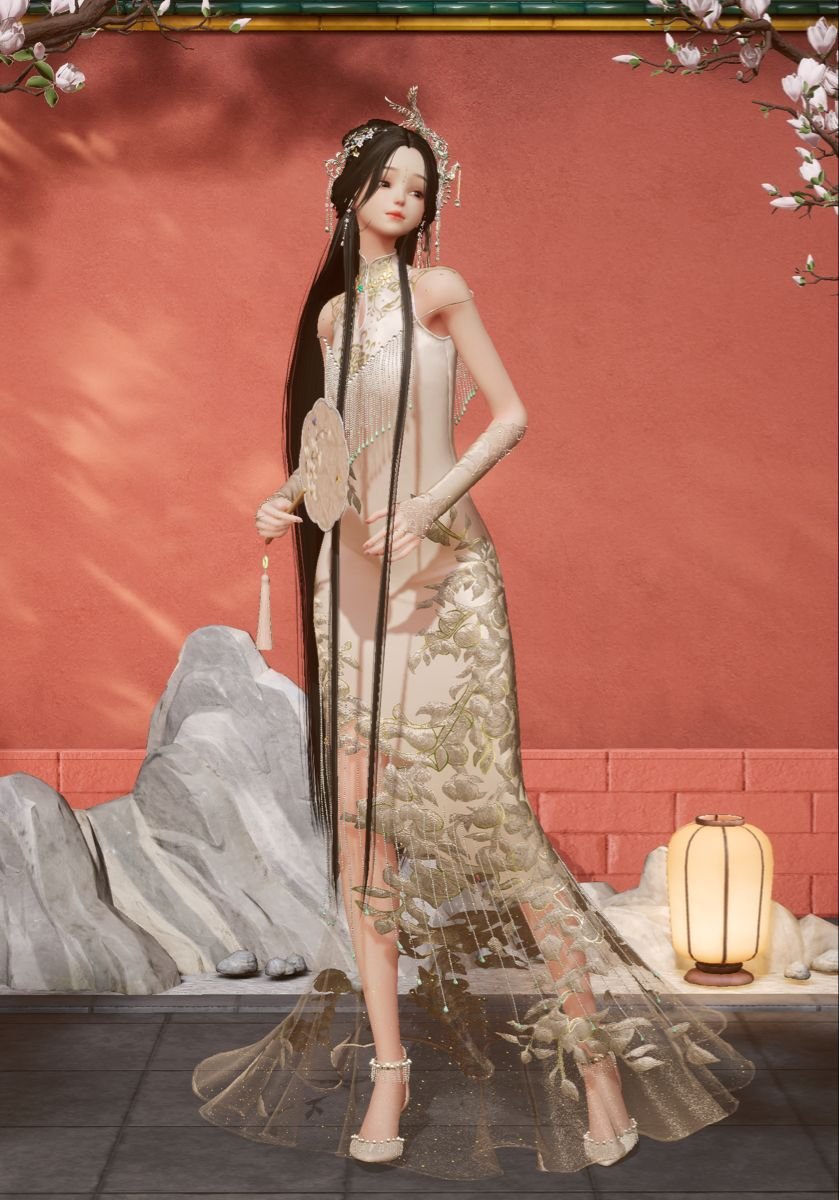
The cheongsam—or qipao—is more than just a dress; it’s a living testament to Chinese culture, an emblem of sophisticated femininity, and a garment deeply intertwined with the shifting tides of history. But when we talk about Mid-Century Cheongsam & Fashion, we're not just discussing fabric and form; we're stepping into an era where this iconic silhouette faced its greatest challenges and, paradoxically, secured its place in global consciousness. It’s a story of resilience, elegance, and the enduring power of a design that refused to be confined by borders or politics.
From the bustling streets of 1930s Shanghai to the cinematic allure of 1960s Hong Kong, the cheongsam navigated a complex world, emerging as a symbol of identity, tradition, and undeniable style. This guide will take you through its mid-century journey, offering a nuanced look at its evolution, significance, and lasting appeal.
At a Glance: Mid-Century Cheongsam & Fashion
- A Tale of Two Eras: While flourishing in cosmopolitan Shanghai during its "golden age" (1930s-40s), the mid-century (1950s-70s) saw the cheongsam decline in mainland China due to political shifts but thrive in Hong Kong and the diaspora.
- Symbol of Resilience: In Hong Kong and beyond, it remained a powerful emblem of Chinese heritage and elegance, adapting to new fashion trends while maintaining its classic silhouette.
- Western Perception: Paradoxically, as it faded in daily use in the East, it became more entrenched in Western media, often through exoticized and stereotypical portrayals.
- Iconic Silhouettes: Mid-century designs featured luxurious silks, satins, and velvets, with variations in collar height, sleeve length, and subtle tailoring reflecting both traditional grace and evolving modernity.
- Enduring Influence: The cheongsam's mid-century story laid the groundwork for its later revival, securing its status as a timeless piece of global fashion history.
The Cheongsam's Enduring Legacy: A Mid-Century Snapshot
To truly appreciate the mid-century cheongsam, we must first understand its journey to that pivotal moment. The cheongsam, derived from the Cantonese "cheung-sam" (meaning "long dress"), has roots in the long, loose robes of the Qing dynasty. Over centuries, it transformed from a practical garment to a symbol of grace, its evolution reflecting China's dramatic political and social changes.
By the early 20th century, especially in vibrant Shanghai, the cheongsam began its significant metamorphosis. Influenced by Western tailoring and the Art Deco movement, it shed its looser form to become the sleek, fitted dress we largely recognize today. The 1920s and 1930s saw it embrace tailored cuts, higher collars, and intricate embellishments, blending traditional Chinese motifs like dragons, phoenixes, and peonies with modern aesthetics. This was its "golden age," where it epitomized the elegance of wealthy Chinese women and was popularized by stars like Ruan Lingyu and Anna May Wong.
This rich tapestry of history, which you can delve into further by tracing its full history, set the stage for the dramatic mid-century period, where the cheongsam faced profound challenges and transformations that would define its enduring legacy.
Defining Mid-Century Cheongsam & Fashion: A Tale of Two Eras (1950s-1970s)
The mid-20th century, roughly spanning the 1950s to the 1970s, brought a stark dichotomy to the cheongsam's existence. Political upheaval in mainland China sharply contrasted with its flourishing presence in Hong Kong and among the Chinese diaspora. This period is critical for understanding the garment's resilience and multifaceted identity.
In Mainland China: A Fading Silhouette
With the establishment of the People’s Republic of China in 1949, the socio-political landscape underwent radical shifts. Fashion, like all aspects of life, became a tool for ideological expression. The streamlined, often opulent cheongsam, once a symbol of Shanghai modernity and affluent living, was deemed bourgeois and antithetical to the new communist ideals.
During this period, utilitarian clothing, such as the practical "Mao suit" for both men and women, replaced traditional garments. The Cultural Revolution (1966–1976) further solidified this trend, actively discouraging and even persecuting those who wore traditional or "Western" styles. The cheongsam, with its implied luxury and celebration of individual form, largely disappeared from public view in mainland China, relegated to historical memory or private family heirlooms. It was a dark time for the garment, its vibrant colors and intricate patterns replaced by the somber uniformity of revolutionary attire.
The Hong Kong & Diaspora Revival: A Symbol Endures
While the cheongsam faded in daily life on the mainland, it paradoxically experienced a vibrant second life in Hong Kong, Taiwan, and among the Chinese communities scattered across the globe. Here, it wasn't just fashion; it was an act of cultural preservation, a tangible link to heritage in an increasingly Westernized world.
Hong Kong became the new epicenter of cheongsam fashion. Local designers and tailors, many of whom had migrated from Shanghai, kept the craft alive, adapting the garment to the evolving tastes of the 1950s, '60s, and '70s.
- Fashion Details of the Era:
- Silhouette Refinements: The form remained fitted but often with subtle tweaks. Sleeves varied from cap sleeves to three-quarter lengths, and collars could be lower and more open, reflecting Western cocktail dress trends. Hemlines fluctuated from mid-calf to just above the knee, responding to global fashion cycles.
- Luxurious Fabrics: Silk, satin, brocade, and velvet remained popular choices, often in rich jewel tones or pastel hues. Elaborate embroidery, particularly with floral patterns, dragons, and phoenixes, continued to be a hallmark, signifying status and occasion.
- Functional Elegance: High side slits, initially introduced for mobility in the 1930s, remained a key feature, adding a touch of allure and practicality for movement.
- Tailoring Mastery: The true art of the mid-century cheongsam lay in its tailoring. Each piece was often custom-made, meticulously fitted to the wearer, highlighting the natural curves of the body without being overtly revealing. This bespoke approach ensured a perfect drape and a sophisticated finish.
In Hong Kong, the cheongsam wasn't just for formal events; it was everyday wear for many women, from office workers to socialites. It was a statement of identity, elegance, and continuity with a rich cultural past.
Iconic Representations: Cheongsam on Screen
The mid-century cheongsam also became an undeniable force in global media, albeit with a double-edged sword. As it faded from daily life in the East, it became fixed in the Western imagination, often stereotyped. Films like The World of Suzie Wong (1960) played a significant role in cementing the cheongsam's image for Western audiences, portraying it through a lens that often leaned into "Orientalist fantasies" and objectification. This cinematic exposure, while boosting its global recognition, sometimes stripped the garment of its complex cultural context.
However, films by Asian directors also used the cheongsam to powerful effect. Wong Kar-wai's critically acclaimed In the Mood for Love (2000), though released later, beautifully captures the essence of 1960s Hong Kong cheongsam fashion, using Maggie Cheung’s stunning array of cheongsams to visually narrate emotional depth and period authenticity. The film’s portrayal of the garment remains one of its most evocative and admired. You can Explore In the Mood for Love to see just how integral the cheongsam was to its storytelling and visual impact.
This period was a complex crucible for the cheongsam: suppressed in its homeland, celebrated in its adopted homes, and simultaneously admired and misunderstood on the global stage. It cemented its status not just as fashion, but as a potent cultural anchor.
Beyond the Stereotype: Reclaiming a Narrative
For many, especially those living in the Chinese diaspora, the cheongsam became more than just an item of clothing; it was a connection to a homeland they might never have seen, a tangible piece of their heritage. This emotional resonance deepened its significance during the mid-century.
Western Gaze vs. Authentic Heritage
The challenge for the mid-century cheongsam was how it was perceived. In the West, its fitted silhouette and exotic patterns were often reduced to a symbol of "Oriental" allure, frequently sexualized or exoticized. This narrow perception often overlooked the garment’s profound cultural history, its sophisticated craftsmanship, and its role as an everyday staple for many women in Hong Kong and other diaspora communities. It became a visual shorthand, often simplifying a rich culture into a one-dimensional fantasy.
The Cultural Crossroads
For generations living at the intersection of cultures, the cheongsam represented a delicate balance. It allowed them to express their Chinese identity while navigating Western societies. Wearing a cheongsam was an act of pride, a quiet assertion of heritage that transcended language barriers. It spoke to belonging, to memory, and to a lineage that persisted despite geographical distance or political upheaval. It’s part of the broader conversation around clothing and cultural identity.
The Cheongsam Today: A Modern Resurgence
While our focus remains on the mid-century, it's worth noting that the story doesn't end there. A significant revival began in the 1990s and 2000s, reinterpreting the cheongsam as a symbol of Chinese cultural pride. Globalization brought it to international runways, with designers experimenting with new materials, cuts, and contemporary elements.
Today, the cheongsam is cherished for bridal wear, formal events, and cultural festivals. Modern versions often incorporate Western tailoring for global appeal, showcasing modern adaptations that ensure its relevance for younger generations. It's seen a reawakening, making the cheongsam both traditional and trending, moving past earlier perceptions of being "too sexy, too ethnic, too old-fashioned."
Navigating the Nuances: Cultural Appreciation vs. Appropriation
Given the cheongsam’s complex history, especially its mid-century portrayals, discussions around cultural ownership and appropriation are essential. The garment has, at times, been reduced to a costume or a commercial commodity without respectful acknowledgement of its origins.
East Asian fashion historian Jonathan Lee emphasizes that intent and context define the difference between "appropriation" and "appreciation." Appropriation often involves exoticizing for profit or novelty, stripping the item of its cultural significance, while appreciation involves teaching traditional craft, building community, and genuinely respecting its heritage.
As consumers and fashion enthusiasts, our role is to seek out creators who honor the garment’s roots, learn about its history, and advocate for its multifaceted identity beyond specific holidays or stereotypes. This means choosing thoughtfully and understanding delving deeper into cultural appropriation versus appreciation in fashion.
Your Guide to Understanding and Appreciating Mid-Century Cheongsam
If you're drawn to the elegance of mid-century cheongsam, whether for collecting, wearing, or simply appreciating, here’s what you need to know.
What to Look For in a Vintage Piece
Authentic mid-century cheongsams are treasures, often carrying the story of their past wearers and the skilled tailors who crafted them. Learning how to identify authentic vintage pieces can enrich your appreciation.
- Fabric Quality: Look for natural fibers like silk, satin, brocade, or velvet. These fabrics were luxurious and common during the mid-century. Polyester was less prevalent in high-quality garments of this era.
- Construction and Tailoring: Examine the seams. Vintage cheongsams often feature hand-finished details, French seams, or very precise machine stitching. The fit should be form-fitting but allow for movement, indicating expert tailoring.
- Buttons and Closures: Traditional frog buttons (mandarin knots) are a classic feature, often meticulously crafted. Side zippers or snaps were also common for closure.
- Collar and Hemline: Mid-century collars vary, but the classic high mandarin collar is iconic. Hemlines typically range from just below the knee to mid-calf.
- Condition: Vintage pieces will show some age, but look for well-preserved fabrics, intact seams, and minimal staining or damage.
- Label: If a label exists, research the brand or tailor. Many bespoke pieces may not have a brand label but will show signs of custom craftsmanship.
Styling Your Cheongsam (Modern & Traditional)
The beauty of the cheongsam is its versatility. You can honor its tradition or give it a contemporary twist.
- Classic Elegance: For a timeless look, pair your cheongsam with traditional accessories like jade jewelry, delicate silk slippers, or elegant heels. Keep makeup refined and hair styled in a classic updo or soft waves. This is perfect for formal events or cultural celebrations.
- Modern Fusion: To update a vintage cheongsam, consider pairing it with modern shoes like ankle boots or minimalist heels. A sleek clutch, contemporary jewelry, or a tailored blazer can add a fresh, personal touch. For a more casual vibe, a shorter cheongsam can even be worn over slim-fit trousers or leggings, though this is a significant departure from traditional styling.
- Layering: In cooler weather, a tailored coat or a delicate pashmina can complement the cheongsam without overshadowing its design.
Common Questions & Misconceptions
Is Cheongsam the same as Qipao?
Yes, largely. While the terms "cheongsam" (Cantonese for "long garment") and "qipao" (Mandarin for "banner robe") are often used interchangeably, some purists differentiate them. The original qipao was a looser, A-line Manchu robe. The modern, fitted version we discuss, which became popular in 1920s Shanghai, is often referred to as a "cheongsam," particularly in the West due to Hong Kong's influence. For general understanding, they refer to the same iconic fitted dress.
Was the mid-century cheongsam really about female liberation?
This is a debated point. When the cheongsam first emerged in the early 20th century, its streamlined form was seen by some as a modern departure from restrictive traditional wear. However, its increasingly fitted silhouette in the 1930s-40s also sparked debate about perceived immodesty versus true liberation. During the mid-century (1950s-70s) in Hong Kong, while it certainly offered a stylish and practical garment for women, its primary role shifted more towards symbolizing traditional elegance and cultural identity rather than being a vanguard of feminist liberation.
Why did it become "too sexy" in the West?
The Western perception of the cheongsam as "too sexy" often stems from a combination of factors: the exoticization of Asian cultures, its fitted silhouette contrasting with Western fashion norms of the time, and its portrayal in sensationalized Hollywood films. The high side slit, initially designed for mobility, became a focal point for this interpretation. This objectification often overlooked the garment's sophisticated tailoring, cultural significance, and its use as dignified everyday wear in many contexts.
Embracing the Legacy: More Than Just a Dress
The mid-century cheongsam's journey is a powerful narrative of survival and adaptation. From facing political suppression to becoming a beacon of cultural identity in the diaspora, its story reflects the complex interplay of fashion, politics, and heritage. It’s a garment that transcends mere aesthetics, serving as a reminder of resilience, pride, and the timeless elegance that defined an era.
As you explore the world of the cheongsam, remember that you're engaging with a piece of living history. By appreciating its craftsmanship, understanding its context, and championing its authentic narrative, you help ensure that its legacy continues to inspire and evolve for generations to come. It’s a bridge between past and present, a symbol that speaks to those living at the intersection of cultures, generations, and identities, representing a truly multifaceted cultural anchor.